Independent UK jewellery guidance. This guide focuses on the evidence a buyer can check without claiming hands-on testing, guaranteed outcomes or permanent prices.
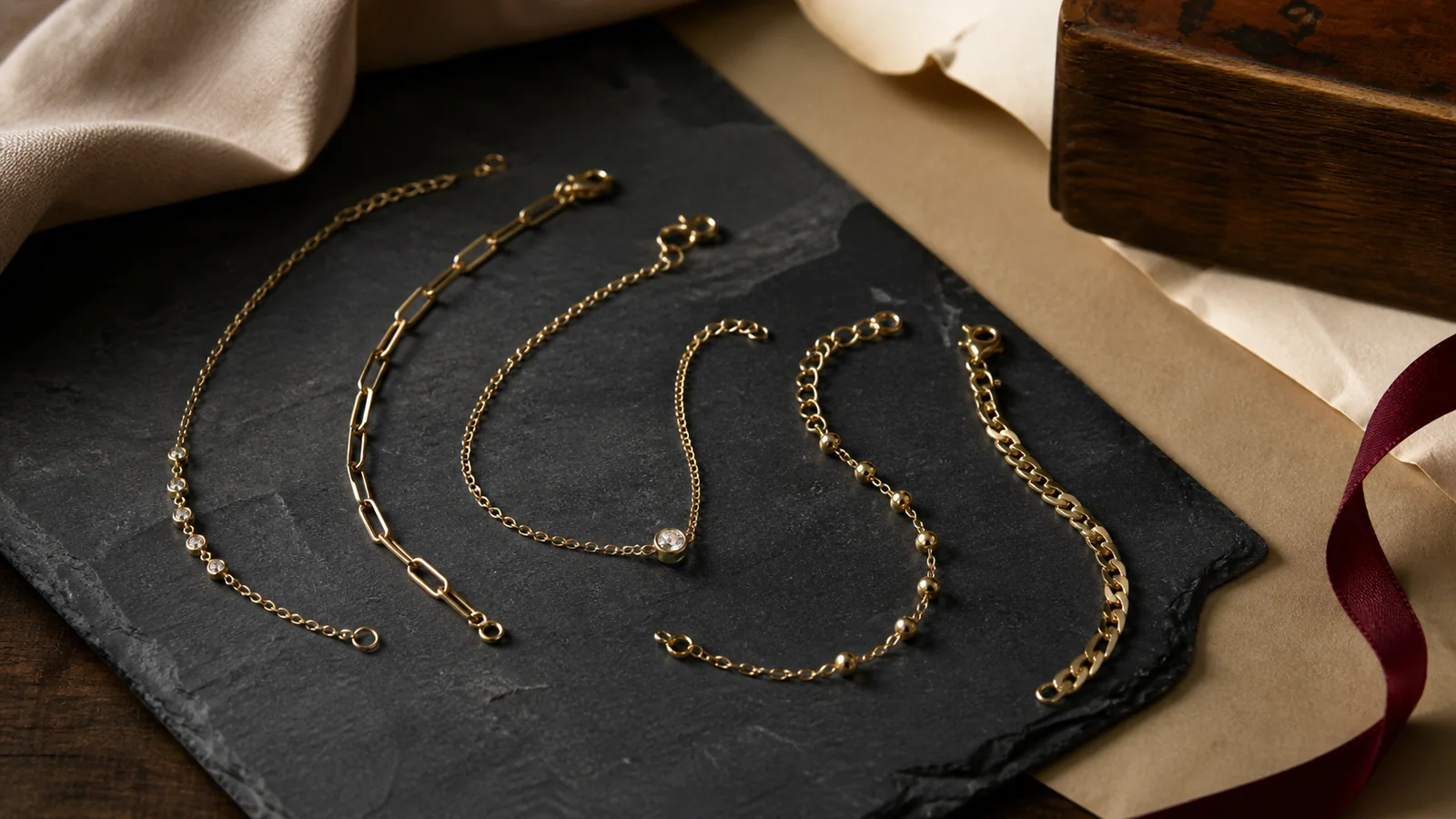
A polished product page can answer the easiest question while leaving the expensive questions untouched. This article examines Best Gold Bracelets for Small Wrists With Stated Usable Lengths for a UK reader and keeps four questions visible throughout: fineness and hallmark evidence, construction, dimensions and finish, wear expectations, repair and aftercare and maintenance and aftercare.
A useful best-picks article starts with a declared candidate pool and one set of criteria. It should include credible non-affiliate alternatives, reject products that hide important information and explain why a different buyer may reasonably choose a different option. Prices, availability, delivery promises and retailer policies can change; check every commercial detail at the retailer immediately before purchase.
Editorial answer in brief
| Article type | Buyer-first shortlist |
|---|---|
| Decision | Best Gold Bracelets for Small Wrists With Stated Usable Lengths |
| Start with | fineness and hallmark evidence |
| Do not overlook | wear expectations, repair and aftercare |
| Current-status rule | Check the latest description, final price, stock, delivery, returns, warranty and aftercare at the retailer. |
What this decision is really about
The headline question is only useful when it is translated into evidence. For Best Gold Bracelets for Small Wrists With Stated Usable Lengths, the reader should record the exact words used for the metal, stones, dimensions, construction and intended care. Marketing expressions such as “premium”, “ethical”, “waterproof”, “heirloom” or “investment” are not specifications unless the retailer defines the claim and supports it.
Context matters as much as the object. A design intended for occasional wear can be a poor match for sleep, sport, childcare or manual work. A material that suits one skin or maintenance routine does not become universally suitable. A careful decision should therefore account for the wearer, frequency of use, tolerance for maintenance, budget boundary and access to repair or resizing.
Finally, separate product evidence from retailer evidence. A well-made piece can still be a difficult online purchase when delivery, returns, exclusions, warranty or contact routes are unclear. Conversely, a generous policy does not repair a vague material description. Both layers belong in the same recommendation.
Evidence to collect before making a recommendation
- Product description: capture the exact material, fineness, plating, gemstone, treatment and origin wording that applies.
- Measurements: record the dimensions that affect appearance, fit, weight, fastening, setting height and everyday handling.
- Construction: identify links, hinges, posts, clasps, settings, hollow sections, coatings and components that change wear or repair options.
- Service: date-check UK delivery, returns, exclusions, resizing, warranty, repairs, replating and customer-contact routes.
- Evidence boundary: separate retailer information, primary guidance, documented inspection and editorial inference.
- Commercial boundary: treat any commercial relationship separately from the evidence used to compare or recommend an option.
Compare the dimensions that can change the answer
1. Fineness and hallmark evidence
Write down what the seller states, what can be independently checked and what remains unknown. For this dimension, a useful comparison explains the practical consequence rather than merely repeating a specification. Ask how it affects fit, maintenance, repair, appearance or the right to change one’s mind after an online order.
2. Construction, dimensions and finish
Write down what the seller states, what can be independently checked and what remains unknown. For this dimension, a useful comparison explains the practical consequence rather than merely repeating a specification. Ask how it affects fit, maintenance, repair, appearance or the right to change one’s mind after an online order.
3. Wear expectations, repair and aftercare
Write down what the seller states, what can be independently checked and what remains unknown. For this dimension, a useful comparison explains the practical consequence rather than merely repeating a specification. Ask how it affects fit, maintenance, repair, appearance or the right to change one’s mind after an online order.
A like-for-like comparison grid
| Decision area | Option or claim being assessed | Credible alternative or different buyer route |
|---|---|---|
| Fineness and hallmark evidence | Record the verified description, evidence and consequence. | Apply the same test; note when this route becomes the better fit. |
| Construction, dimensions and finish | Record the verified description, evidence and consequence. | Apply the same test; note when this route becomes the better fit. |
| Wear expectations, repair and aftercare | Record the verified description, evidence and consequence. | Apply the same test; note when this route becomes the better fit. |
| Maintenance and aftercare | Record the verified description, evidence and consequence. | Apply the same test; note when this route becomes the better fit. |
| Main limitation | State a drawback that could genuinely change the decision. | State a different drawback without disguising it as praise. |
UK retailer and policy checks
Before choosing a UK retailer, confirm whether the listed price includes the expected taxes and whether delivery timing separates dispatch from transit. Record tracking, insurance and signature arrangements where the value makes them material. For international sellers, clarify currency, import charges, returns location and who carries postage risk.
Read the returns policy rather than relying on a product-page badge. Personalised, engraved, resized, made-to-order and hygiene-sensitive items can follow different rules. Record the returns window, condition requirements, return postage, refund timing and any approval process. Treat a warranty as written fault cover, not as insurance and not as a promise against normal wear.
Aftercare can change value. Ask whether the retailer supports cleaning, inspection, resizing, replating, restringing, stone tightening, replacement components or paid repairs. Note the cost boundary, postage responsibility and whether work by a third party affects warranty coverage.
Who may reach a different conclusion?
The low-maintenance buyer
This reader may accept fewer style or personalisation choices in return for clear care boundaries, accessible repairs and construction suited to the intended routine. The recommendation must still avoid universal claims about durability, water exposure or skin response.
The detail-led buyer
This reader values measurements, material evidence and documented trade-offs more than a large catalogue. A retailer that answers specific questions and supplies useful photographs may be a better fit than one offering more products with less information.
The flexible gift buyer
This reader may prioritise adjustable fit, unambiguous delivery dates, presentation and a workable return route. Personalisation can add meaning but can also remove flexibility, so proofs, spelling, production timing and cancellation terms belong beside the design.
A practical decision sequence
- Define the wearer, occasion, intended frequency and non-negotiable budget.
- Copy the exact product description and the measurements that affect the decision.
- Identify the three most important unknowns and ask the retailer specific questions.
- Apply the same evidence test to at least one credible alternative, including a non-affiliate option where available.
- Read delivery, returns, exclusions, warranty and aftercare before using a commercial link.
- Save the final description and policy evidence for a high-value or personalised purchase.
Common mistakes to avoid
- Treating colour, photography or a familiar brand as proof of material or construction.
- Comparing headline prices without matching dimensions, weight, finish, setting or service.
- Presenting one wearer’s experience as a universal durability or sensitivity claim.
- Calling a grading report, hallmark, warranty or valuation something it is not designed to be.
- Publishing a “best” result before defining the candidate pool and rejection criteria.
- Using a changing price, delivery estimate or promotion without a dated source check.
Frequently asked questions
What should I verify first for best gold bracelets for small wrists with stated usable lengths?
Start with fineness and hallmark evidence. If the product page does not provide enough information, ask the retailer before comparing price or following a recommendation.
Can photographs settle this decision?
No. Images are useful for design and visible condition, but magnification, lighting and styling can hide scale. Use stated measurements, material descriptions, construction details and policy evidence alongside photography.
Does a higher price prove better quality?
No single price point proves construction, finish, durability or service. Compare like with like, document what the price includes and explain which buyer benefits from the difference.
What must be checked again before purchase?
Recheck the final specification, current price, stock, delivery, returns, exclusions, warranty, resizing or repair route on the retailer’s own website. Save relevant information for an expensive or personalised order.
How should an affiliate relationship affect the conclusion?
It should not determine inclusion, scoring or rank. The relationship must be disclosed, the link marked as sponsored, and material disadvantages kept as visible as the positive case.
Editorial conclusion
No product should become a winner because it pays the highest commission or carries the largest discount. A responsible shortlist names the buyer, the evidence, the main limitation and the circumstances in which an alternative is the better choice. For this topic, a useful conclusion answers the title directly and show how fineness and hallmark evidence, construction, dimensions and finish and wear expectations, repair and aftercare support that answer.
Useful sources and checks
- British Hallmarking Council guidance on GOV.UK for relevant precious-metal descriptions and hallmark context.
- GOV.UK online and distance selling guidance for the current legal framework; obtain legal review for policy conclusions.
- The current retailer product page, delivery page, returns policy, warranty and aftercare information, each recorded with an access date.
- An appropriate gemmological, assay-office, maker or care source for every technical claim specific to the materials in this article.
Related reading
Continue with these evidence-first jewellery guides: