Monica Vinader in one sentence
Monica Vinader sits between inexpensive fashion jewellery and traditional solid-gold fine jewellery. The brand is best known for contemporary pieces designed for regular wear, particularly jewellery made from sterling silver or 18ct gold vermeil, alongside selected solid-gold designs and natural gemstones. That middle position is the attraction: the designs can feel considered and gift-worthy without requiring a solid-gold budget. It is also the reason buyers need to read the material description carefully.
The company behind the brand is registered in England and Wales, while the brand’s own history says Monica Vinader launched her eponymous label in 2008. Its public proposition now combines everyday styling with repair, recycling and traceability initiatives. Those are useful signals, but they do not remove the need to judge each piece by its exact metal, construction, dimensions and likely wear.
What this review examined
Our assessment uses five practical questions rather than a star score: Is the material description understandable? Does the construction fit the intended use? What maintenance is likely? What happens if the piece needs attention? Are important purchase limitations visible before checkout?
We reviewed the brand’s published material explanations, care advice, warranty and repair information, UK terms and traceability claims. We did not assess stone grading, clasp strength or finish consistency on individual products because those points require inspection of the exact piece.
This distinction matters. A polished website can show design language, dimensions and policy, but it cannot tell a reader how a particular hinge feels, whether a chain catches on clothing or how a plated surface will respond to that person’s wearing habits. The fairest conclusion is therefore about buyer fit and evidence quality, not an invented laboratory result.
Materials: read beyond the colour
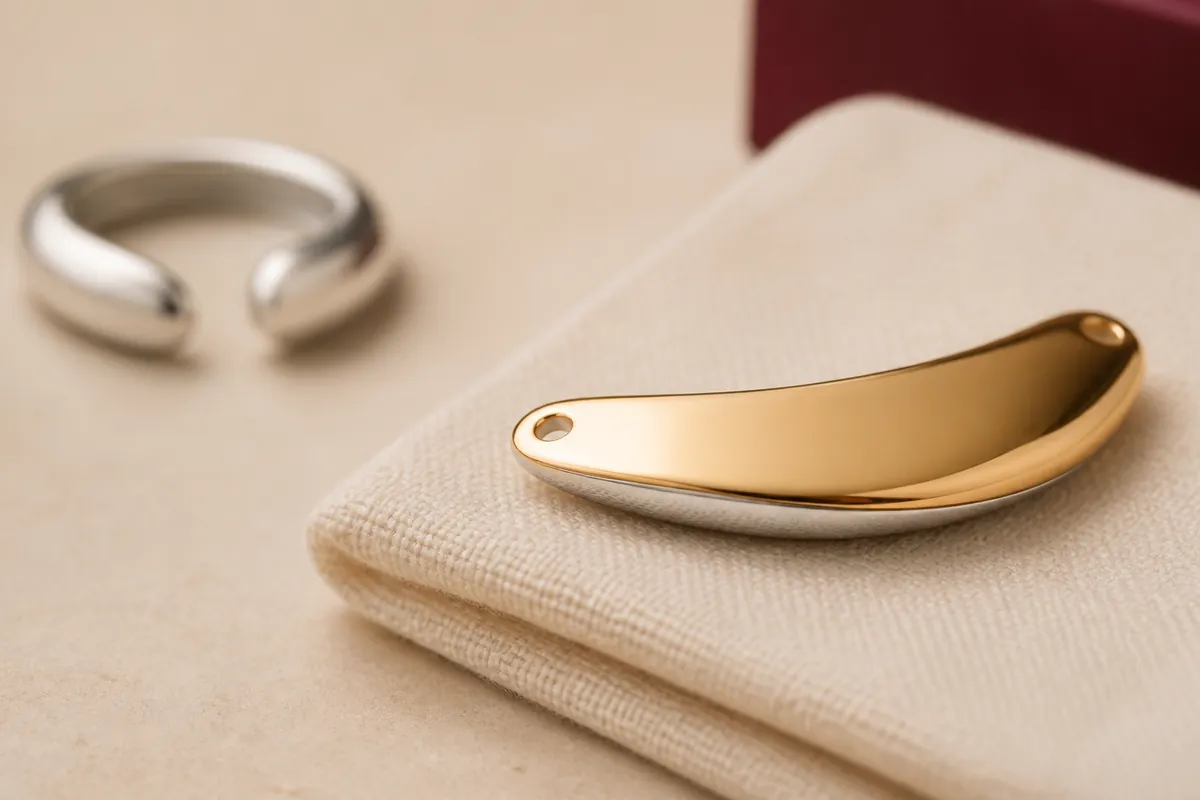
A gold-coloured piece can be solid gold, gold vermeil or another form of plated jewellery; these are not interchangeable descriptions. Monica Vinader describes its vermeil as 18ct gold over sterling silver. The precious-metal base is a meaningful advantage over a vague base-metal description, yet the visible gold remains a surface layer rather than the full substance of the piece. Friction, moisture, cosmetics and repeated contact can affect that surface over time.
| Material description | What the buyer is getting | Practical implication | What to verify |
|---|---|---|---|
| Sterling silver | A silver alloy rather than pure silver | Can tarnish and benefit from careful polishing and dry storage | Weight, dimensions, hallmark where legally required, and stone-setting details |
| 18ct gold vermeil | A gold layer applied over sterling silver | Offers a gold appearance at a lower cost than solid gold, but the finish needs considerate wear | Base metal, finish, care instructions, replating route and exclusions |
| Solid gold | Gold alloy through the body of the component | No plated gold surface to wear away, although scratching and deformation remain possible | Gold fineness, component dimensions, hallmark where required, and whether every component uses the same material |
| Natural gemstone | A stone whose colour, inclusions and durability vary by type and specimen | Care cannot be assumed from appearance alone | Stone identity, treatment disclosure, measurements, setting protection and cleaning restrictions |
For UK buyers, a hallmark is a separate question from branding. British Hallmarking Council guidance explains that precious-metal articles described as gold, silver, platinum or palladium generally require a legally recognised hallmark when they exceed the relevant exemption weight. A logo, receipt or attractive finish is not a substitute. On a substantial precious-metal purchase, ask where the hallmark is located and what each compulsory mark means.
The design appeal—and its trade-off
Monica Vinader’s strongest aesthetic territory is adaptable rather than ceremonial: compact hoops, stacking rings, chains, pendants, engravable pieces and coloured-stone accents that can move between work, weekends and gifting. This makes the brand easier to integrate into an existing jewellery wardrobe than a highly formal piece bought for one occasion. It also means shoppers can be tempted to treat every design as effortless, everyday jewellery.
“Everyday” should describe styling versatility, not immunity from wear. A fine chain can still pull; a low-profile ring can still collect knocks; a gemstone can still chip; a vermeil finish can still change with abrasion and chemicals.
Before buying, compare the dimensions with a piece already owned. For earrings, check diameter, drop and closure. For chains, note length, adjustability and link construction. For rings, consider band width as well as nominal size. For gemstones, ask whether the setting leaves vulnerable edges exposed.
Personalisation deserves the same discipline. Engraving can make a gift more meaningful, but the brand’s UK terms exclude engraved or bespoke items from ordinary cancellation, refund and exchange rights unless there is a fault or fulfilment problem. Confirm spelling, character limits, placement and final size before approving the order.
Care is part of the ownership cost
The brand advises removing jewellery for showering, bathing, heavy exercise and swimming, and keeping it away from perfume, creams, bleach and other chemicals. It also recommends separate, soft storage and material-appropriate cleaning. These are not minor footnotes for a vermeil buyer: they describe the habits most likely to preserve the finish.
A buyer who enjoys rotating jewellery and storing it carefully may find that routine entirely reasonable. Someone who wants to put on one necklace and leave it there through sleep, sport and bathing may find the same piece frustrating. The decision is therefore not simply “Is vermeil good?” but “Does vermeil match the way I actually wear jewellery?”
The five-year warranty is meaningful, but read the conditions
Monica Vinader currently publishes a five-year warranty and a lifetime repair route. Its aftercare information says replating, resizing and repairs may be available, while a piece that cannot be repaired within the warranty may be replaced. The brand also says paid repair can remain available after five years or without proof of purchase.
That gives the buyer a defined route back to the maker—something that is often missing from low-cost jewellery.
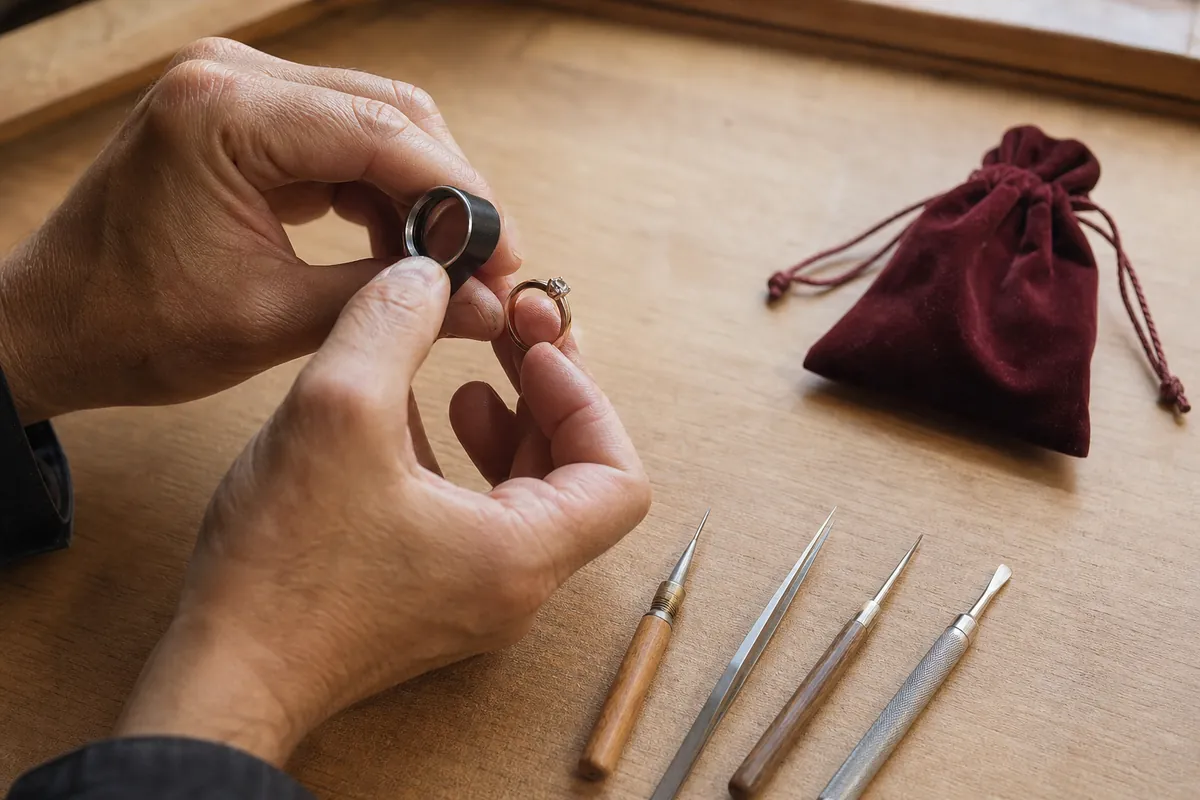
There are boundaries. Proof of purchase matters for a warranty claim; some ring configurations cannot be resized; sample-sale and promotional items can have exclusions; and a fee may apply outside the warranty. If the item came from a department store or another authorised retailer, keep that retailer’s receipt because the brand may not be able to retrieve it. A warranty also sits alongside, rather than replaces, statutory consumer rights.
Keep after purchase
- The order confirmation or retailer receipt
- The product page or material description saved as a PDF
- The warranty terms that applied on the purchase date
- Personalisation approval and final artwork, where relevant
- Photographs of the piece when first received
How to read the sustainability claims
Monica Vinader states that it uses 100% recycled gold and sterling silver, recyclable packaging and reusable pouches. It also promotes Product Passport information for traceable items, covering stages such as design, material sourcing, craftsmanship and packaging. These features can give a buyer more questions to ask and more information to retain.
They should not be turned into a blanket conclusion that every product has no environmental or social impact. “Recycled” identifies an input; it does not by itself describe the energy used, every supplier, transport, gemstone origin, product lifespan or eventual recovery rate.
Product Passport information is most useful when it is available for the exact item and specific enough to be checked. The responsible approach is to treat transparency as evidence to examine, not a halo that ends the examination.
Returns and the points to recheck at checkout
At the time of our review, the brand’s UK terms stated that prices for UK delivery include VAT and allowed returns within 100 days after delivery. They also stated that engraved or bespoke products cannot ordinarily be cancelled, refunded or exchanged unless faulty, damaged or incorrectly supplied.
Delivery charges, return procedures and promotion-specific conditions can change, so read the live terms again rather than relying on an old article or search result.
Check four things on the day of purchase: whether the item is full price or subject to a special-sale exclusion; whether personalisation changes return eligibility; who pays for the return; and which proof of purchase will be accepted for later aftercare. If buying as a gift, give the recipient access to the relevant order details without disclosing the price where possible.
Who Monica Vinader is most likely to suit
A good fit for
- Buyers who like contemporary, restrained jewellery that can be layered or personalised
- Gift shoppers who value recognisable presentation and a documented aftercare route
- People comfortable with the care requirements of sterling silver, gemstones and vermeil
- Shoppers who want clearer material language than an unspecified “gold-tone” description
- Owners willing to keep receipts and use repair or replating services when needed
Look elsewhere when
- You specifically want solid gold throughout and do not want to manage a plated surface
- You rarely remove jewellery for bathing, swimming, exercise or cosmetic application
- Your priority is maximum metal weight rather than design, personalisation and service
- You need a gemstone purchase with a detailed independent grading report
- You cannot accept the return restriction attached to an engraved or bespoke item
Seven questions to ask before ordering
- What is every visible and structural component made from? Check posts, backs, clasps and chain components, not only the centrepiece.
- Is the piece vermeil or solid gold? The colour alone cannot answer this.
- What are the dimensions in millimetres? Product photography can make delicate pieces appear larger.
- Does this item carry a hallmark, and is it above an exemption weight? Ask for a clear explanation rather than guessing from a photograph.
- Can the piece be resized, repaired or replated? Availability can depend on the design.
- Will engraving or another alteration remove ordinary return options? Confirm before personalising.
- What evidence should be retained? Save the receipt, material description and applicable terms.
Final verdict
Monica Vinader is a credible option for UK buyers who want contemporary jewellery, understand the distinction between vermeil and solid gold, and place real value on repair access. Its published five-year warranty and lifetime repair route strengthen the proposition because they create a path beyond the initial unboxing. Its material and traceability information also make a more informed conversation possible.
The recommendation is not universal. Vermeil remains a cared-for finish, natural gemstones still require material-specific caution, and personalisation can narrow return rights.
Choose Monica Vinader for a design you will actually wear and maintain—not simply for the promise attached to the name. If the intended piece will face constant water, abrasion or chemical exposure, compare the cost of a suitable solid-gold alternative before committing.
Sources and review method
This guide was prepared from public desk research and uses merchant sources for brand-specific statements, with UK government guidance for hallmarking and company identity. Policies can change after publication.